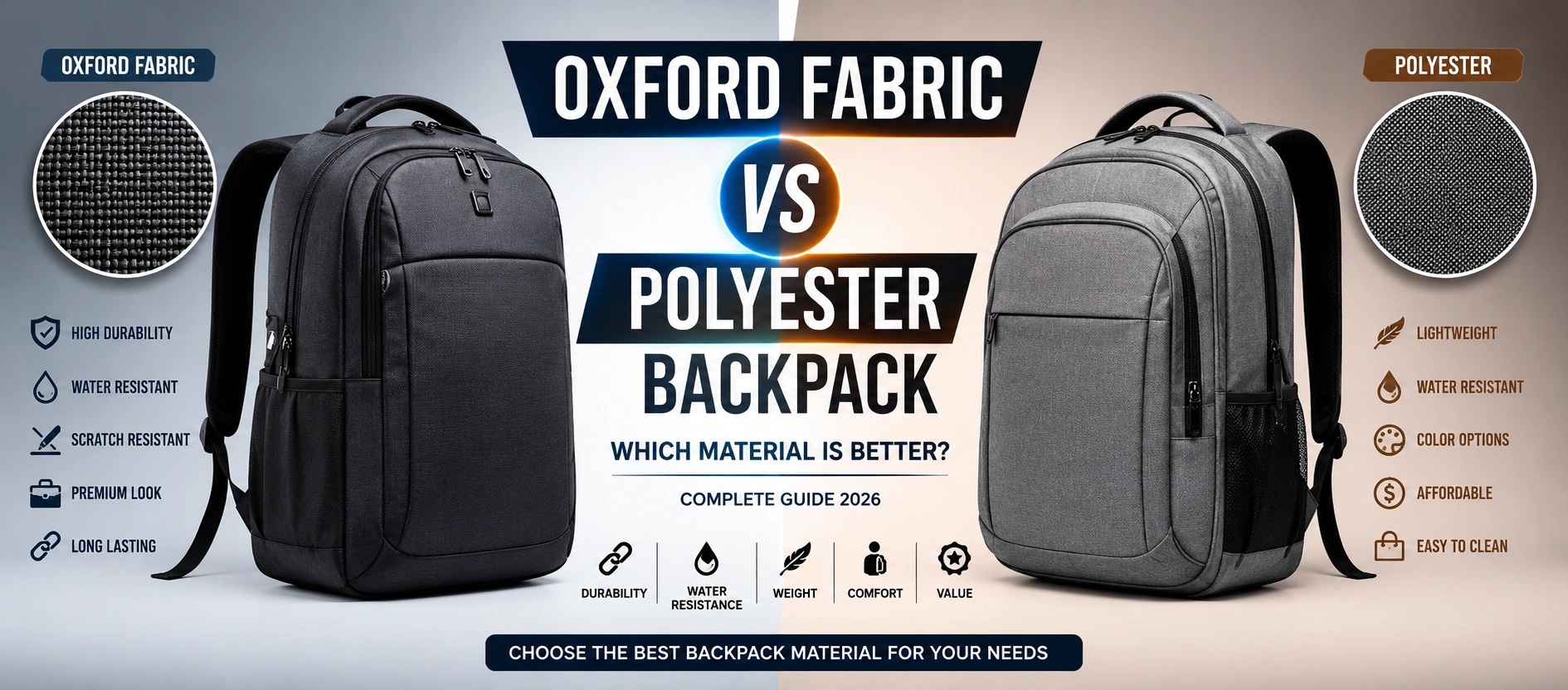
Oxford Fabric vs Polyester Backpack: Which Material Is Better? (2026 Ultimate Guide)
Why Backpack Material Matters More Than Most Buyers Realize
When people buy a new backpack, they usually compare the price, design, storage capacity, or brand name. While these factors are important, they don’t tell the whole story. The single biggest factor that determines how a backpack performs over time is often hidden in its product specifications—the material used to make it.
A backpack may look premium on the outside, but if the fabric is poorly chosen or poorly constructed, it may lose its shape, absorb water, fade quickly, or show signs of wear after only a few months of regular use. On the other hand, a well-made backpack built with durable materials can continue to protect your laptop, documents, and daily essentials for years.
This is why understanding backpack materials is just as important as choosing the right size or style.
Today, two materials dominate the backpack market: Oxford Fabric and Polyester. These names appear on thousands of product listings, yet they are also among the most misunderstood terms in the industry. Many buyers assume Oxford Fabric is always superior, while others think polyester is only used in low-quality bags. The truth is much more nuanced.
In this guide, we’ll explore how these materials differ, where they excel, and how to choose the right one based on your daily needs.
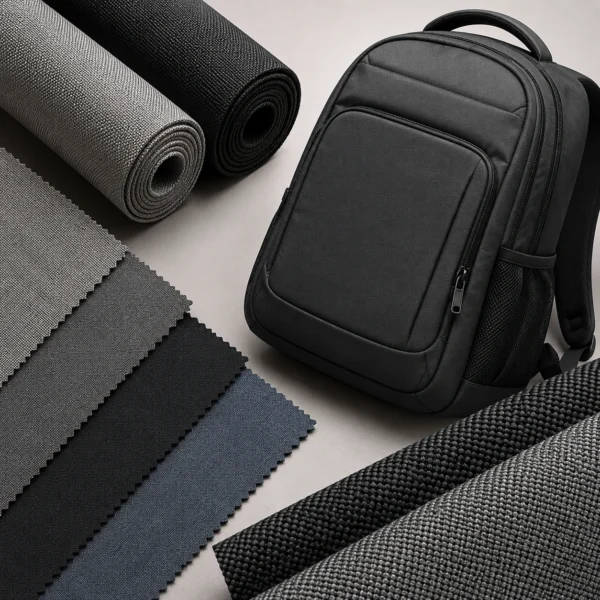 Why the Right Backpack Material Can Save You Money
Buying a backpack is an investment, especially if you carry expensive electronics such as a laptop, tablet, camera, or documents. A bag that wears out quickly may need to be replaced much sooner than expected, leading to additional costs over time.
The right material can influence:
- Durability during daily use
- Resistance to scratches and abrasion
- Performance in light rain
- Comfort while carrying heavy loads
- Ease of cleaning and maintenance
- Overall lifespan of the backpack
Rather than choosing the cheapest option, it’s often better to evaluate the long-term value a backpack can provide.
Oxford Fabric vs Polyester: A Common Misunderstanding
One of the biggest misconceptions in the backpack industry is that Oxford Fabric and Polyester are direct competitors. In reality, they describe two different aspects of a fabric.
- Polyester is a synthetic fiber.
- Oxford is a weaving pattern.
This means a backpack can actually be made from polyester fibers woven in an Oxford weave. Likewise, Oxford Fabric can also be produced using nylon fibers.
Because of this, comparing “Oxford vs Polyester” is a simplified way of comparing Oxford weave fabrics with standard polyester fabrics commonly used in backpacks.
Understanding this difference helps buyers read product specifications more accurately and avoid marketing confusion.
What Is Oxford Fabric?
Oxford Fabric is known for its basket-weave construction, which creates a textured surface and improves the fabric’s strength and stability. Originally developed for clothing, this weaving technique has evolved into one of the most popular choices for premium backpacks, travel bags, and luggage.
Modern Oxford Fabric is often manufactured using synthetic fibers such as polyester or nylon. Depending on the yarn thickness (denier), weave quality, and protective coatings, Oxford Fabric can offer excellent durability and a refined appearance suitable for professional use.
What Is Polyester?
Polyester is one of the world’s most widely used synthetic fibers. It is lightweight, durable, and resistant to shrinking and stretching. Because it is relatively affordable to manufacture, polyester is commonly found in school backpacks, sports bags, casual daypacks, and travel accessories.
Modern polyester fabrics can also receive special coatings to improve water resistance and durability, making them suitable for many everyday applications.
First Impressions: Appearance and Texture
Before considering technical specifications, most buyers judge a backpack by how it looks and feels.
Oxford Fabric generally has a textured surface that gives it a premium, structured appearance. This subtle texture is one reason it is commonly used in business and office backpacks.
Standard polyester fabrics often have a smoother finish. Depending on the manufacturing process, they may appear slightly shinier than Oxford fabrics.
Neither appearance is inherently better. Some buyers prefer the clean, professional look of Oxford Fabric, while others appreciate the lightweight feel of polyester.
Durability Starts with Construction
Although material is important, it is only one part of the equation. A backpack’s lifespan also depends on:
- Fabric quality
- Weave consistency
- Stitching strength
- Reinforced stress points
- Zipper quality
- Hardware durability
- Protective coatings
A well-constructed polyester backpack may outlast a poorly made Oxford backpack if the overall craftsmanship is superior. This is why buyers should evaluate the entire product rather than focusing on material alone.
Which Material Is Better for Different Users?
Different lifestyles require different backpack characteristics.
Students
Students often carry books, notebooks, stationery, and sometimes laptops. Lightweight construction and affordability are usually important.
Office Professionals
Professionals typically carry laptops, chargers, documents, and personal accessories. A structured design and professional appearance often matter as much as durability.
Travelers
Travelers need backpacks that can handle repeated handling, changing weather conditions, and heavier loads while remaining comfortable during long journeys.
Everyday Commuters
Daily commuters benefit from backpacks that resist abrasion, maintain their shape, and protect electronics during regular travel.
Understanding your daily routine is the first step toward choosing the right material.
Water Resistance: What Buyers Should Know
Many product descriptions use terms such as:
- Water-resistant
- Water-Resistant
- Splash-proof
These terms do not mean the same thing.
Most Oxford Fabric and polyester backpacks are water-resistant, not fully waterproof. Water resistance is usually achieved by applying protective coatings such as polyurethane (PU) or other durable water-repellent finishes.
These coatings help protect the contents of the backpack during light rain or accidental spills. However, prolonged exposure to heavy rain or complete submersion can still allow water to enter, particularly through zippers and seams unless they are specifically designed to be water-resistant.
Understanding these terms helps buyers set realistic expectations when selecting a backpack.
Why Denier Ratings Matter
When browsing backpacks, you may encounter specifications like:
- 300D
- 600D
- 900D
- 1680D
The letter D stands for Denier, which measures the thickness of the yarn used to produce the fabric.
In general:
- Lower denier fabrics are lighter and more flexible.
- Higher denier fabrics are usually more resistant to abrasion and tearing.
However, denier alone does not determine overall quality. Weave, fiber type, coatings, and construction all contribute to the final performance of the backpack.
How to Choose the Right Backpack Material
Instead of asking, “Which material is better?”, consider asking:
- Will I carry a laptop every day?
- Do I travel frequently?
- Will the backpack be exposed to rain?
- Do I need maximum durability or minimum weight?
- How many years do I expect the backpack to last?
Answering these questions makes it much easier to choose the material that best fits your needs.
Key Takeaways
- Backpack material plays a major role in durability, comfort, and long-term value.
- Oxford Fabric refers to a weaving style, while polyester refers to the synthetic fiber itself.
- Both materials can perform well when combined with quality construction and protective coatings.
- Water-resistant does not necessarily mean waterproof.
- Denier ratings help indicate yarn thickness but should not be the only factor considered when evaluating a backpack.
- The best backpack is the one that matches your daily activities, budget, and expectations for long-term performance.
Looking Beyond Marketing Claims
Walk into any bag shop or browse online, and you’ll quickly notice a pattern. One backpack claims to be made with premium Oxford Fabric, while another highlights high-quality polyester. Both products promise durability, water resistance, and long-lasting performance.
For many buyers, this creates confusion.
Does Oxford Fabric automatically mean a better backpack?
Is polyester only used in budget bags?
The answer is no.
The quality of a backpack depends on much more than the material listed in its specifications. Factors such as yarn quality, weaving technique, denier rating, protective coatings, stitching, reinforcement, and hardware all contribute to its real-world performance.
Instead of relying on marketing terms, it’s more useful to compare how these materials behave during everyday use.
Durability: Which Material Lasts Longer?
Durability is one of the most important considerations when buying a backpack.
Whether you’re carrying textbooks, a laptop, travel essentials, or office equipment, the fabric should withstand daily use without losing its shape or developing damage.
Oxford Fabric is well known for its textured weave, which helps distribute stress across the fabric surface. This makes it highly resistant to everyday abrasion and helps maintain the backpack’s structure over time.
Standard polyester fabrics can also be durable, particularly when manufactured with higher denier yarns and quality construction. However, lower-grade polyester used in inexpensive backpacks may show signs of wear more quickly.
In practical terms:
- For light everyday use, both materials can perform well.
- For frequent commuting or business travel, higher-quality Oxford Fabric often provides better long-term shape retention.
- Construction quality remains just as important as the material itself.
Abrasion Resistance
Every backpack experiences friction.
Examples include:
- Sliding under an office desk
- Being placed on rough concrete floors
- Rubbing against clothing while walking
- Contact with airport luggage compartments
Abrasion resistance refers to how well a fabric withstands this repeated friction.
Oxford Fabric generally performs well because its weave creates a stronger surface capable of resisting everyday wear.
Higher-denier polyester fabrics also provide good abrasion resistance, but lightweight polyester materials may begin showing surface wear sooner under heavy daily use.
For professionals and frequent travelers, abrasion resistance is especially important because the backpack is constantly exposed to repeated handling.
Tear Resistance
A backpack doesn’t always fail because the fabric wears out.
Sometimes damage begins with a small tear.
Common causes include:
- Sharp corners of books
- Heavy laptops
- Overloading
- Accidental snagging
- Rough handling during travel
Oxford Fabric’s basket-weave structure helps reduce the spread of small tears by distributing tension more evenly.
Polyester fabrics can also resist tearing effectively, especially when thicker yarns are used.
However, once again, the quality of the fabric and manufacturing process matter far more than the name alone.
Shape Retention
One of the biggest differences buyers notice after months of use is shape retention.
Premium Oxford backpacks often maintain their structured appearance even after carrying heavy loads regularly.
This makes them particularly popular among:
- Office professionals
- Business travelers
- Laptop users
Standard polyester backpacks may become softer over time depending on fabric thickness and internal support materials.
If maintaining a professional appearance is important, shape retention becomes a valuable advantage.
Water Resistance: Understanding the Difference
Many shoppers assume Oxford Fabric is naturally water-resistant.
That isn’t accurate.
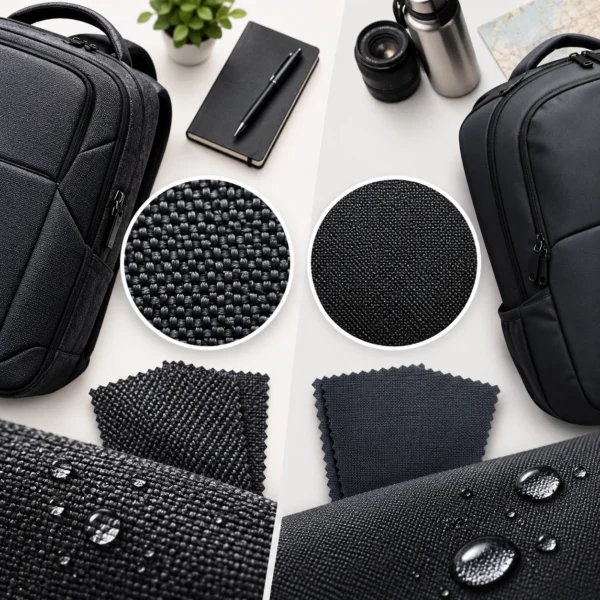
Neither Oxford Fabric nor polyester is automatically water-resistant.
Instead, manufacturers apply protective coatings that help repel water.
Common examples include:
- Polyurethane (PU)
- PVC coatings
- Durable Water Repellent (DWR) finishes
These treatments help prevent light rain from soaking into the fabric.
However, several other factors influence water protection:
- Seam construction
- Zipper design
- Coating quality
- Fabric density
- Manufacturing standards
Even a high-quality fabric can allow water inside if the seams or zippers are not designed to resist moisture.
 Performance in Daily Commuting
Daily commuters typically expose their backpacks to:
- Public transport
- Office environments
- Cafés
- Rainy sidewalks
- Frequent packing and unpacking
In these situations, buyers often value:
- Comfortable carrying
- Easy cleaning
- Professional appearance
- Reliable laptop protection
- Long-term durability
Oxford Fabric is frequently chosen for commuter backpacks because it balances durability with a refined appearance.
Polyester remains an excellent choice for lighter everyday use, especially when affordability is a priority.
Office Professionals
Office users generally carry:
- Laptop
- Charger
- Mouse
- Notebook
- Documents
- Water bottle
- Personal accessories
A structured backpack that maintains its appearance throughout the workday often creates a more professional impression.
For this reason, many business-oriented backpacks use Oxford-style woven fabrics together with padded laptop compartments and reinforced stitching.
University Students
Students often prioritize:
- Lightweight construction
- Large storage capacity
- Affordable price
- Comfortable shoulder straps
Both Oxford Fabric and polyester can work well.
The better choice depends on:
- Daily carrying weight
- Travel distance
- Frequency of use
- Budget
For students carrying heavier laptops and textbooks every day, durability becomes increasingly important.
Frequent Travelers
Travel places greater demands on a backpack than ordinary commuting.
Airports, buses, trains, hotels, and crowded environments expose the bag to constant movement and repeated handling.
Travelers often benefit from backpacks offering:
- Durable exterior fabric
- Water-resistant finish
- Reinforced handles
- Strong zippers
- Comfortable shoulder straps
- Structured design
Material is only one part of this equation, but it remains an important factor.
Cleaning and Maintenance
A backpack that is easy to maintain generally lasts longer.
For both Oxford Fabric and polyester:
- Remove dust using a soft cloth.
- Clean small stains with mild soap and water.
- Allow the backpack to air dry completely.
- Avoid prolonged exposure to direct sunlight after washing.
- Store the backpack in a dry, ventilated place.
Harsh chemicals or machine washing may reduce the effectiveness of water-repellent coatings, depending on the manufacturer’s care instructions.
Common Myths About Backpack Materials
Myth 1: Oxford Fabric is always water-resistant.
Reality:
Water resistance depends primarily on coatings and construction rather than the weave alone.
Myth 2: Polyester is low quality.
Reality:
High-grade polyester is used in many premium backpacks and outdoor products.
Myth 3: Higher denier always means a better backpack.
Reality:
Denier indicates yarn thickness, but overall performance also depends on weave, stitching, reinforcement, coatings, and manufacturing quality.
Myth 4: Material is the only thing that matters.
Reality:
A backpack’s lifespan depends on the complete design, including zippers, stitching, hardware, padding, and construction methods.
Quick Comparison Table
| Feature | Oxford Fabric | Polyester |
|---|---|---|
| Appearance | Premium textured finish | Smooth finish |
| Shape Retention | Excellent | Good |
| Everyday Durability | Excellent | Good to Excellent |
| Weight | Moderate | Generally lighter |
| Water Resistance | Depends on coating | Depends on coating |
| Office Use | Excellent | Good |
| Student Use | Excellent | Excellent |
| Travel Use | Excellent | Very Good |
| Maintenance | Easy | Easy |
| Cost | Usually higher | Usually more affordable |
Which Material Should You Choose?
There is no universal winner.
Choose a backpack based on how you will use it, not simply on the material name.
Consider:
- Your daily carrying habits
- The weight of your belongings
- Local weather conditions
- Budget
- Desired appearance
- Expected lifespan
For many buyers, a well-designed backpack with quality stitching, reliable zippers, and durable construction will provide greater long-term value than focusing on fabric alone.
Key Takeaways
- Oxford Fabric and polyester are both capable backpack materials when manufactured to a high standard.
- Durability depends on fabric quality, denier, coatings, stitching, and overall construction.
- Water resistance comes from protective treatments and design—not the material name alone.
- Oxford Fabric is often preferred for structured business and travel backpacks.
- Polyester remains a practical, lightweight, and versatile option for everyday use.
- The best backpack is the one that matches your specific lifestyle, rather than the one with the most impressive marketing description.